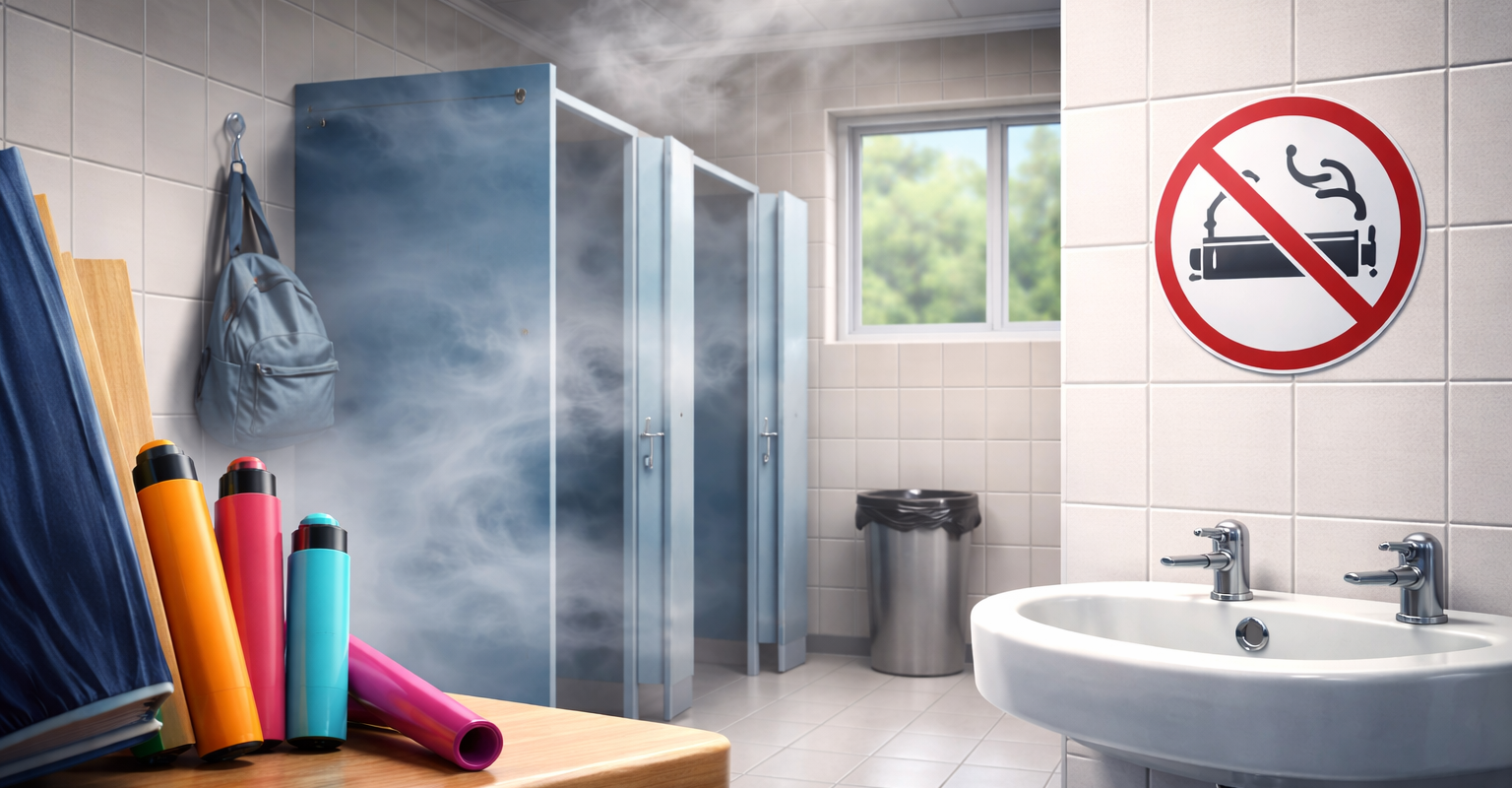
Over the past decade, disposable and flavoured e-cigarettes have made vaping highly accessible to teenagers. Devices are small, easy to conceal, and often produce minimal visible vapour.
Common hotspots for vaping in schools include:
- Toilets and washrooms
- Changing rooms
- Stairwells
- Low-traffic corridors
- School transport
While some students view vaping as “low risk,” research shows nicotine exposure in adolescence can affect brain development, concentration, and long-term addiction pathways.
For schools, vaping creates wider safeguarding concerns:
- Increased peer pressure
- Bullying and exploitation risks
- Damage to toilets and facilities
- Fire alarm triggering from vapour
- Links to illicit substances
Deterrence is therefore not just about rule enforcement — it’s about protecting student health and wellbeing.
Why Traditional Approaches Don’t Work
Many schools rely on:
- Staff patrols
- CCTV in corridors
- Behaviour sanctions
- Student education assemblies
While education is essential, supervision alone rarely prevents vaping in private areas like toilets — where CCTV cannot legally operate.
Students quickly learn:
- When staff are on duty
- Which toilets are least monitored
- How to conceal devices
This reactive approach leads to frustration for staff and inconsistent enforcement.
Schools need a proactive, non-invasive solution.
How Smart Vape Detection Systems Work
Modern vape detection systems for schools use advanced air quality sensors to detect:
- Vape aerosols (including THC variants)
- Rapid changes in particulate matter
- Volatile organic compounds (VOCs)
- Air pressure disturbances
- Elevated sound levels (optional aggression detection)
When vaping is detected, the system:
- Triggers a real-time alert
- Sends notification to safeguarding staff
- Logs the incident with timestamp and location
- Provides reporting data for behaviour tracking
Importantly, these systems do not record video or audio conversations, ensuring privacy compliance while still enabling targeted intervention.
Why Vape Detection Works as a Deterrent
The greatest impact of vape detection is not punishment — it is psychological deterrence.
When students know:
- Sensors are installed
- Alerts are immediate
- Incidents are logged
Vaping drops significantly.
Schools using vape detection commonly report:
- Reduction in repeat incidents
- Decreased damage to toilets
- Improved staff confidence
- Fewer fire alarm disruptions
- Clear safeguarding audit trails
In many cases, behaviour shifts within weeks of installation.
Deterrence works because certainty of detection is more powerful than severity of punishment.
Supporting Safeguarding and Ofsted Expectations
Under current safeguarding guidance, schools must:
- Demonstrate active monitoring of pupil welfare
- Reduce health risks on site
- Evidence preventative strategies
Vape detection provides:
- Data-driven incident reporting
- Behaviour pattern identification
- Early intervention opportunities
- Clear evidence for governors and inspectors
Rather than anecdotal reports, schools can present measurable data on incidents and improvements over time.
Health and Wellbeing Benefits for Students
Beyond enforcement, vape detection contributes to:
- Reduced nicotine exposure
- Lower peer pressure in toilets
- Safer shared spaces
- Fewer vulnerable students being drawn into group behaviour
By reducing vaping hotspots, schools create calmer, safer environments that support learning.
Choosing the Right Vape Detection System
When evaluating a school vape detection solution, consider:
- Sensitivity to modern disposable devices
- False alarm reduction
- Dashboard reporting capability
- Integration with wider air quality monitoring
- Data privacy compliance
- Ease of installation
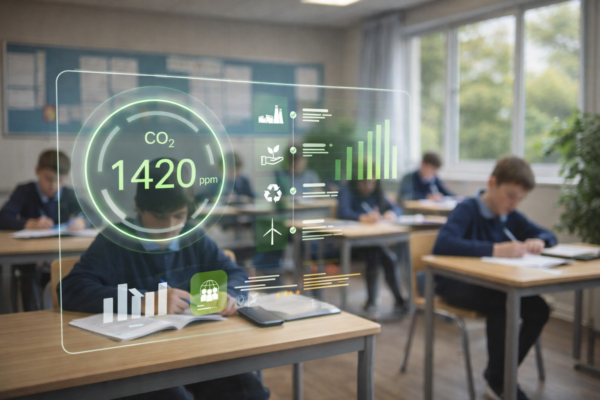
Systems that also monitor overall indoor air quality can provide added value — helping schools improve ventilation, reduce CO₂, and support learning outcomes.
A Smarter, Preventative Approach
Vaping in schools is not a passing trend. It requires:
- Education
- Clear behaviour policies
- Parental engagement
- Smart environmental monitoring
By combining awareness with technology, schools move from reactive discipline to proactive safeguarding.
Smart vape detection systems empower staff, deter misuse, and protect student health — without compromising privacy.
Looking Ahead
As schools continue to modernise their safeguarding strategies, intelligent environmental monitoring is becoming part of a broader smart school safety ecosystem.
Vape detection is no longer about “catching students.”
It’s about:
- Protecting young people
- Supporting staff
- Reducing long-term health risks
- Creating a culture of accountability
For schools serious about tackling teen vaping, detection technology is quickly becoming an essential safeguarding tool.