Indoor air quality is one of the most overlooked factors affecting student performance. While schools focus heavily on curriculum, behaviour, and technology, a silent influence often goes unnoticed:
Carbon dioxide (CO₂) levels in classrooms.
Elevated CO₂ is not just a ventilation issue — it directly affects concentration, cognitive function, and learning outcomes. For UK schools committed to improving attainment and wellbeing, understanding and managing classroom air quality is becoming essential.
What Happens When CO₂ Levels Rise in Classrooms?
CO₂ is naturally produced when we breathe. In a typical classroom of 30 pupils, carbon dioxide levels can rise rapidly — particularly in winter when windows remain closed.
Outdoor CO₂ averages around 420 ppm (parts per million). However, the UK Department for Education (DfE) advises that indoor CO₂ levels should ideally remain below 1,000 ppm, and should not regularly exceed 1,500 ppm in teaching spaces (DfE, Building Bulletin 101: Ventilation, thermal comfort and indoor air quality, 2018; updated 2021).
When levels rise above this, research indicates measurable effects:
- 1,000 ppm – Reduced concentration begins
- 1,500 ppm – Noticeable drowsiness and slower cognitive processing
- 2,000+ ppm – Headaches, fatigue, impaired decision-making
Unlike smoke or fire risk, high CO₂ is invisible — but its impact on learning is real.
The Research Linking CO₂ and Cognitive Performance
Multiple peer-reviewed studies have demonstrated the cognitive effects of elevated CO₂.
A widely cited study from Harvard T.H. Chan School of Public Health found that cognitive function scores were significantly lower when participants were exposed to CO₂ levels of 1,400 ppm compared to 600 ppm (Allen et al., 2016, Environmental Health Perspectives).
Similarly:
- Satish et al. (2012) found moderate CO₂ increases impaired decision-making performance.
- A review in Indoor Air journal concluded that classroom ventilation rates are directly associated with improved academic performance (Wargocki & Wyon, 2013).
The Education Endowment Foundation (EEF) also recognises that environmental factors affecting comfort and health can influence learning readiness and attainment.
For schools focused on progress measures and pupil outcomes, this evidence is significant.
Why CO₂ Levels Spike in UK Classrooms
Several factors contribute to elevated CO₂ in schools:
- Energy efficiency improvements reducing natural airflow
- Cold weather limiting window opening
- Older buildings without mechanical ventilation
- High occupancy density
- Poor HVAC balancing
The DfE’s guidance during and after the COVID-19 pandemic further highlighted the importance of ventilation in reducing airborne contaminants and maintaining healthy learning environments.
However, many schools still rely on subjective judgement — opening windows when a room “feels stuffy.”
Without monitoring, CO₂ levels may already be affecting performance long before discomfort is noticeable.
How Smart CO₂ Monitoring Improves Learning Environments
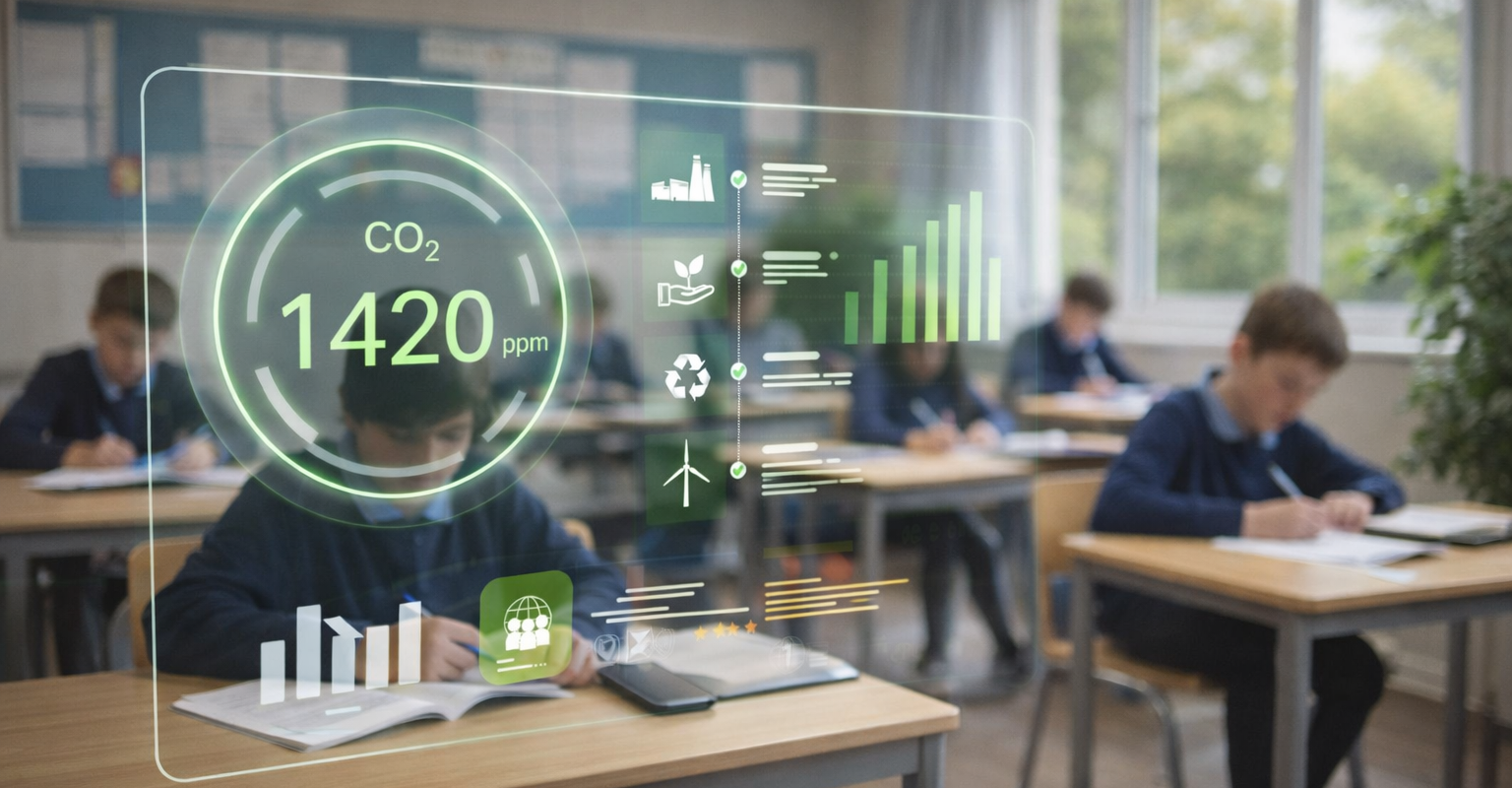
Modern monitoring systems provide real-time visibility into classroom CO₂ levels.
With continuous monitoring, schools can:
- Identify poorly ventilated rooms
- Trigger alerts when thresholds exceed DfE recommendations
- Track seasonal and occupancy trends
- Balance ventilation with heating efficiency
- Evidence compliance with Building Bulletin 101
Rather than reacting to discomfort, schools can take data-driven preventative action.
How EnviroSentry Supports Healthier Classrooms
EnviroSentry integrates continuous CO₂ monitoring into a wider environmental intelligence platform designed specifically for schools.
With EnviroSentry, schools gain:
- Real-time CO₂ visibility at classroom level
- Customisable alert thresholds aligned to DfE guidance
- Centralised dashboard oversight
- Historical reporting for governors and estates committees
- Multi-room comparison across sites
By embedding CO₂ monitoring within a unified safeguarding and environmental system, school leaders can directly link air quality to wellbeing, behaviour, and performance data.
Supporting Governance, Estates and Sustainability
Improving indoor air quality aligns with:
- DfE ventilation guidance (Building Bulletin 101)
- Staff and student wellbeing priorities
- Energy optimisation strategies
- Net zero and sustainability planning
For multi-academy trusts, CO₂ monitoring supports:
- Estate-wide benchmarking
- Evidence-based capital planning
- Long-term building performance optimisation
Importantly, it demonstrates proactive leadership in creating healthy learning environments.
The Academic Case for Cleaner Air
Cleaner air supports:
- Better concentration
- Reduced fatigue
- Improved behaviour regulation
- Increased teacher comfort
- Lower absence from minor illness
In a sector where schools strive for marginal gains, air quality is a controllable factor with measurable impact.